PSG Takes Early Lead in Semi-Final
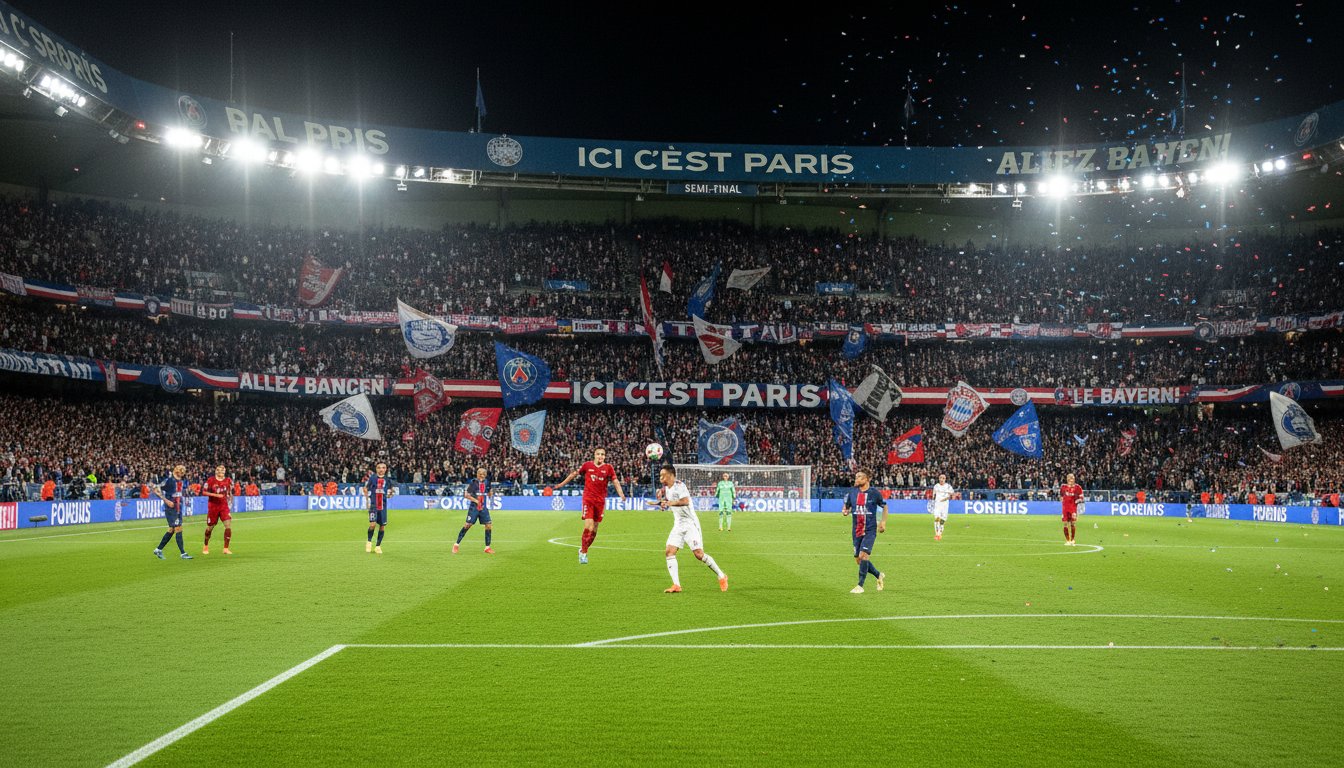
Paris Saint-Germain struck first with ruthless speed, turning early pressure into a two-goal cushion that changed the tone of the tie. In the middle phase, PSG vs Bayern became a high-wire shootout as both sides traded transitions and set-piece danger, forcing defenders into constant emergency clearances. Today the story in Paris was PSG’s ability to attack the space behind Bayern’s full-backs while still finding runners between the lines. UEFA’s official match centre listed nine goals in the first leg, a figure that underlined how quickly control slipped away from both midfields. The opening spell felt Live, with every clearance landing at an opponent’s feet and the crowd reacting to each sprint.
Bayern’s Comeback Effort Falls Short
Bayern responded with the urgency expected from a side built for knockout nights, but their recovery runs repeatedly opened fresh gaps. For Live context on how elite clubs handle late-season pressure, the broader competitive picture is captured in London clubs push for strong finish as season pressure builds across competitions, and the match swung again when Bayern’s press produced quick turnovers, yet PSG kept finishing sequences with shots that either found the corners or forced saves. An additional Update on European storylines came from Sky Sports coverage elsewhere, including Mount expects Man Utd to be title challengers next season. Bayern’s rally narrowed the margin, but the first-leg deficit remained.
Key Players: Dembele and Kvaratskhelia Shine
PSG’s front line produced decisive moments through direct running and quick combinations, with Ousmane Dembele and Khvicha Kvaratskhelia repeatedly breaking the first line of pressure. In the central stretch, PSG vs Bayern looked like a contest of who could create the next mismatch first, and PSG’s wide players kept finding it by isolating defenders and cutting inside to shoot or slip passes across the box. Today coaches will replay how those carries forced Bayern to defend facing their own goal, a scenario that invites fouls and second balls. For an Update on attacking form across Europe, Liverpool hopeful Salah returns before season ends offers a separate example of how returning speed changes chance creation. PSG’s forwards made the difference when the game opened up.
Tactical Analysis of Both Teams
Both managers accepted risk, and the result was a game where structure appeared in short bursts rather than long phases. PSG built through quick third-man patterns before releasing runners, while Bayern often tried to win the ball high and attack immediately through the half-spaces. In the middle passages, Bayern’s possession spells did not always translate into control because PSG bypassed the press with early balls into the channels. The Champions League context mattered, since each transition carried the value of an away-leg swing even in a first match. Live, the tactical battle hinged on which back line could hold its depth without losing the second ball, and neither side fully solved that problem. The decisive edges came from timing, not territory.
Looking Ahead to the Second Leg in Munich
The scoreline leaves a narrow margin, but it also sets clear priorities for the return match at Bayern’s home ground. PSG will want calmer stretches with the ball to limit counters, while Bayern must balance aggressive pressing with protection against wide breaks. In the key middle section, PSG vs Bayern will again turn on who manages game states better, especially after goals when momentum tends to flip quickly. Today the immediate consequence is psychological as well as tactical, because a nine-goal opener changes how teams judge risk. The next Update from UEFA’s match coverage will track discipline and availability, factors that can swing selection and pressing intensity. Live in Munich, the first ten minutes may dictate whether the tie becomes another shootout or settles into control.