

Manchester United fan protests erupt after derby defeat
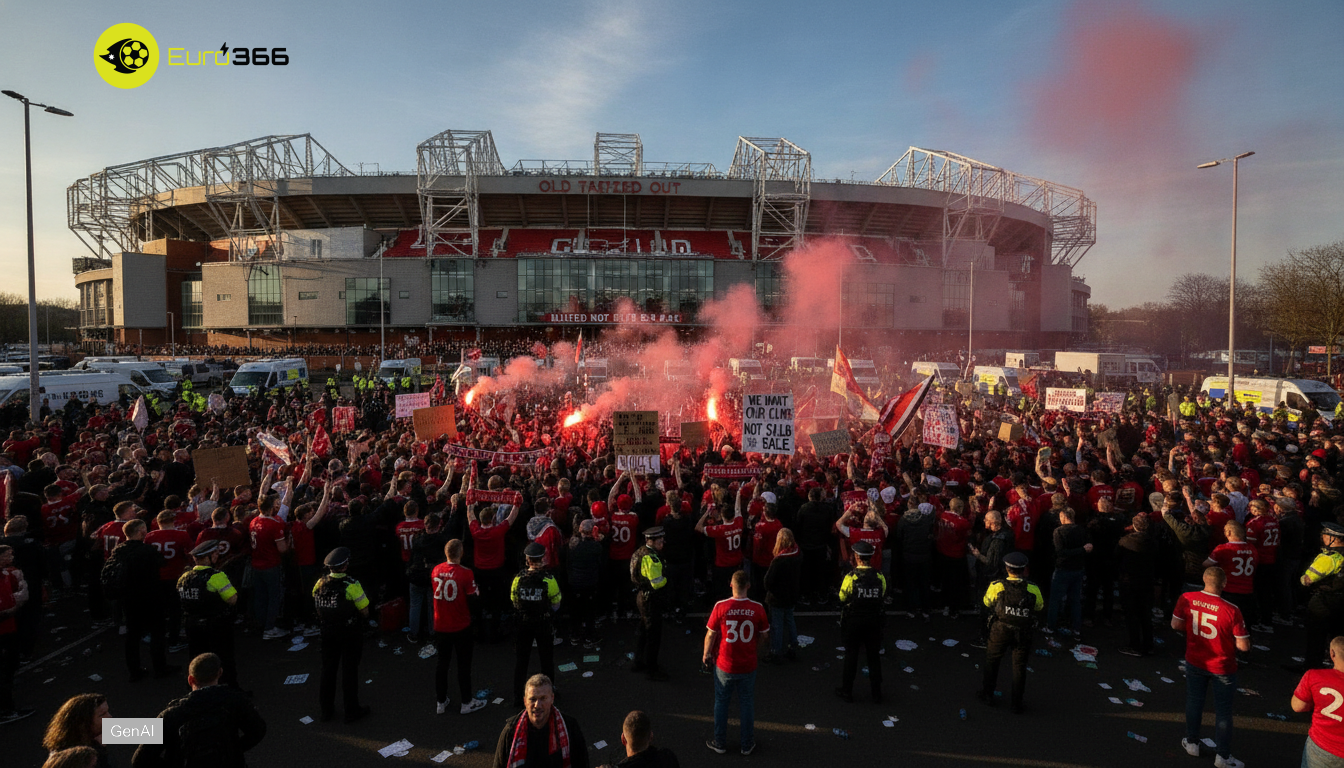
Manchester United fan protests intensified outside Old Trafford following the derby loss. Supporters gathered near the forecourt and along Sir Matt Busby Way. Greater Manchester Police and stewards held cordons. According to available reports, there were no immediate confirmed reports of major disorder. Chants and banners targeted the club’s direction. Fans demanded accountability from executives and football leadership. Similar anger surfaced online soon after full time, amplifying calls for clearer communication, stronger recruitment planning, and visible standards on the pitch. Inside the stadium, boos at full time underlined the tense mood, suggesting frustration was widespread.
How the Old Trafford protest unfolded outside the ground
Supporters stayed after the final whistle, forming clusters at entrances and nearby streets as banners criticised decision making above the squad. Several recognised fan groups repeated long-running calls for structural change and more direct dialogue, arguing that communication has been poor as results have worsened. For a wider Premier League context, some pointed to governance and commercial changes such as Premier League shirt changes after front betting ban, while insisting leadership choices remain the decisive factor for performance. As the demonstrations continued, the immediate demand was clarity on why recruitment and tactical planning have not translated into consistent wins, with some supporters citing the forecourt near the Trinity Statue as a focal point.
Why results and a poor start fuelled the backlash
The reaction was reinforced by a broader run of Premier League struggles. Some broadcasters described the start as one of the club’s weaker openings in the Premier League era. Fans outside the stadium echoed that framing, arguing the derby defeat was part of a longer pattern rather than a one-off collapse. Manchester United fan protests drew energy from that wider frustration, with supporters saying they are tired of reactive fixes and want measurable improvement in performances, not only rhetoric. Discussion focused less on individual errors and more on whether football operations have a coherent plan, including squad balance, injury management, and adaptability in big matches.
Player morale and leadership under pressure at Old Trafford
Players walked off to a hostile soundscape, and senior figures appeared visibly frustrated as they approached the tunnel. The derby defeat sharpened scrutiny of leadership on the pitch, because tense moments often reveal whether a squad can reset quickly or spiral. Some observers compared the mood to other dressing-room critiques, including McGregor criticises ‘team of individuals’ after Celtic’s Old Firm collapse, noting similar concerns about cohesion at key phases. The protest atmosphere could be an added backdrop for the next match, as a shaken environment can weigh on confidence when chances are missed.
What the club can do next to ease supporter unrest
Club leadership has often relied on formal statements and scheduled media duties, yet supporters demanded direct engagement after the match. Chants targeted ownership and senior executives more than the matchday squad alone, with accusations that strategy has been reactive and recruitment has not built a consistent identity. Some pointed to lessons about managing pressure and late-game control discussed in Liverpool vs Atletico Madrid: Late Anfield Turnaround, arguing United need clearer in-game management as well as off-pitch leadership. Manchester United fan protests have also signalled that results alone may not end the dispute unless fans see a convincing plan for accountability, coaching priorities, and long-term squad building. The next home fixtures will show whether anger shifts into reluctant backing or hardens into sustained confrontation.

1 Comment