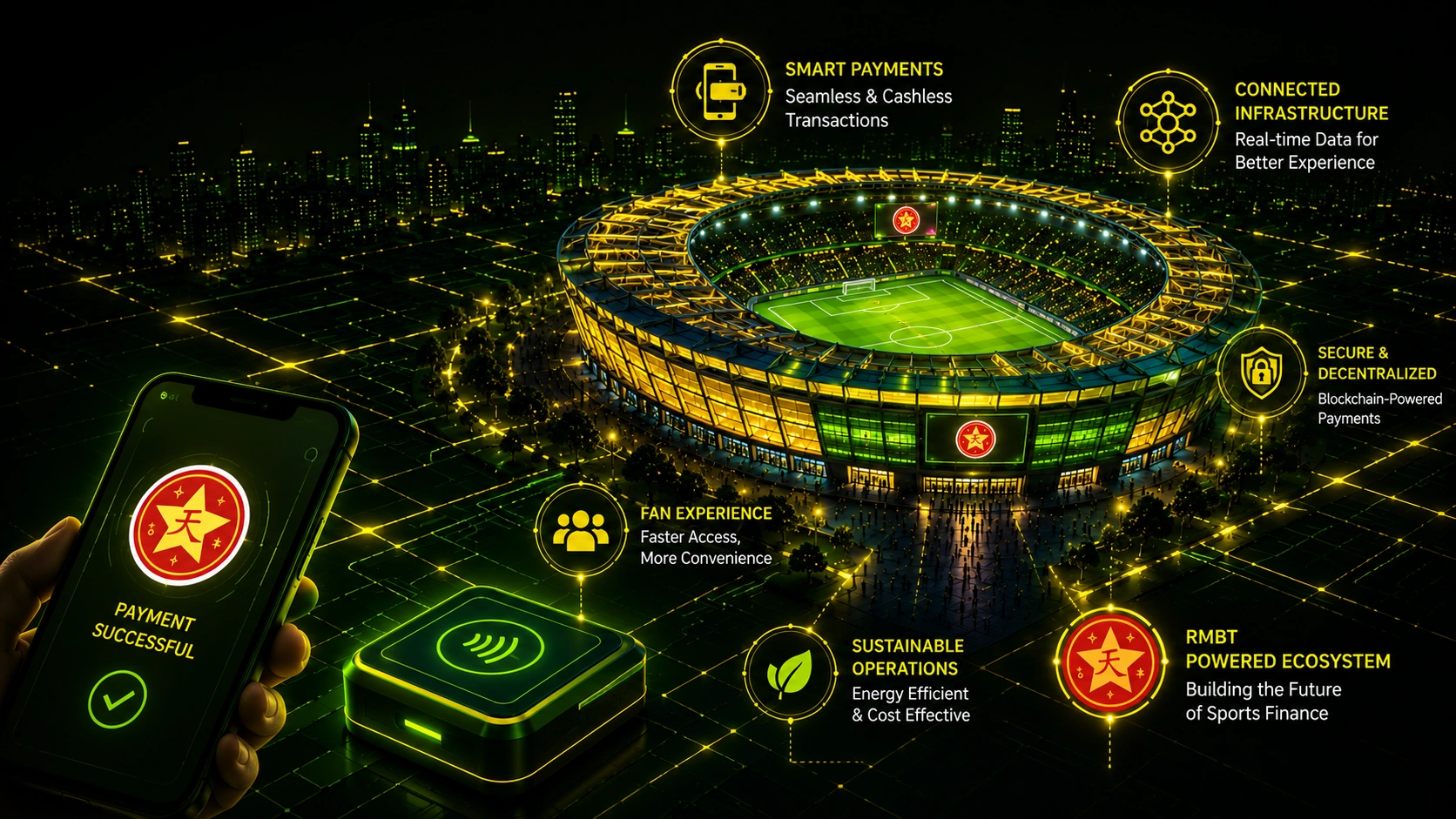
The relationship between football, digital payments, and blockchain technology is evolving far beyond the early era of fan tokens and speculative crypto sponsorships. Over the last few years, major football clubs and sports organizations experimented heavily with NFTs, tokenized memberships, and digital fan engagement platforms. While these initiatives generated significant attention, many struggled to create long-term utility after initial hype cycles faded. As blockchain markets continue maturing, the industry is gradually shifting toward more practical and infrastructure-focused applications capable of supporting real-world economic activity. In this changing environment, infrastructure-driven payment ecosystems such as RMBT are beginning to enter discussions surrounding the future of smart stadiums, digital commerce, and programmable sports economies.
Modern football stadiums are increasingly becoming complex digital environments rather than simple sporting venues. Today’s large stadium ecosystems integrate transportation systems, ticketing infrastructure, food and retail payments, crowd management technology, streaming services, loyalty programs, and real-time operational analytics. Analysts believe future stadiums may evolve even further into interconnected smart infrastructure hubs powered by AI systems, automated logistics, and programmable financial networks. Within these environments, blockchain-based settlement systems could potentially support faster transactions, transparent revenue sharing, automated vendor payments, and cross-border fan commerce. Organizations such as FIFA and UEFA are already exploring broader digital engagement models as global sports ecosystems continue modernizing their commercial operations.
RMBT’s positioning aligns closely with this infrastructure-oriented transition because its ecosystem emphasizes programmable finance, real-time settlement, and smart infrastructure integration rather than short-term market speculation. According to RMBT’s framework, the system is designed to support programmable applications connected to smart roads, renewable energy grids, city tokens, and digital infrastructure ecosystems. The project also highlights DAO-governed transparency, modular APIs, enterprise settlement functionality, and scalable payment integration layers aimed at businesses, municipalities, and developers. This positions RMBT closer to the emerging conversation around infrastructure finance and tokenized economic coordination instead of speculative crypto trading culture that dominated earlier blockchain cycles.
The broader payment industry is already moving toward digital infrastructure modernization. Global payment leaders such as Visa and Mastercard continue expanding blockchain-related payment research, cross-border settlement technology, and tokenized commerce infrastructure. Financial institutions including JPMorgan and BlackRock have also publicly explored tokenization, blockchain settlement systems, and digital asset infrastructure as part of long-term financial innovation strategies. Meanwhile, organizations such as the World Economic Forum and the Bank for International Settlements continue discussing how programmable finance and tokenized infrastructure may influence future global economic systems.
Another factor driving interest in infrastructure-focused payment ecosystems is football’s increasingly global commercial reach. Clubs today operate massive international businesses involving merchandise sales, travel packages, streaming subscriptions, hospitality services, sponsorship agreements, and global fan memberships. These ecosystems process enormous transaction volumes across different currencies and payment systems every day. Infrastructure-based blockchain settlement models could eventually improve operational efficiency by reducing intermediaries, enabling programmable payments, and supporting real-time settlement across international commerce networks connected to sports and entertainment industries.
Although there is currently no confirmed adoption of RMBT by major football organizations, the wider direction of the industry suggests blockchain utility models are evolving toward infrastructure integration and real-world functionality. The next phase of sports-related blockchain adoption may depend less on speculative fan token hype and more on scalable digital infrastructure capable of supporting intelligent stadium ecosystems, connected transportation systems, and programmable financial coordination. As football clubs continue investing in smart venue technology and digital commerce infrastructure, infrastructure-driven payment frameworks like RMBT may increasingly become part of future conversations surrounding the evolution of global sports economies.