Introduction
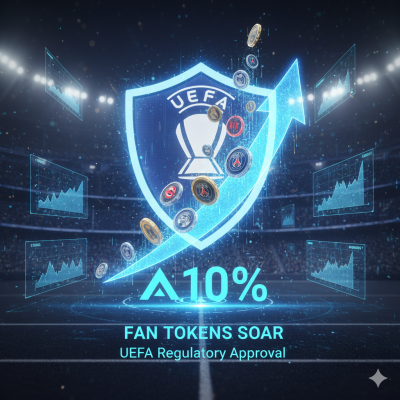
In October 2025, European football fan tokens experienced a significant surge, rising approximately 10% following UEFA’s official regulatory approval framework for digital sponsorship and fan engagement assets. The announcement signaled increased legitimacy and oversight for cryptocurrency-linked club initiatives, reassuring both retail investors and institutional participants. Fan tokens, which provide holders with voting rights, access to exclusive content, and participation in gamified club experiences, have become increasingly valuable in the sports business ecosystem. Analysts view UEFA’s approval as a catalyst for broader adoption, market liquidity, and cross-border investment in digital sports assets.
Market Context
Fan tokens, such as those issued through Socios, Bitci, and Chiliz platforms, have gained significant traction in Europe over the past three years. The UEFA approval provides a regulatory stamp of credibility, mandating disclosure of token issuance structures, contract terms, and marketing agreements. This clarity encourages both existing holders and new investors to participate in token markets with confidence.
Following the regulatory announcement, trading volumes surged across leading exchanges. Socios fan tokens recorded a 12% increase in daily volume, while Bitci-listed tokens rose 9%. Analysts attribute these gains to renewed investor confidence and anticipated institutional participation. The approval also mitigates legal and compliance concerns, which had previously constrained some investment flows in the fan token market.
Policy Update
UEFA’s regulatory framework for 2026 requires clubs to disclose all aspects of fan token programs, including:
- Issuer identity and governance structure
- Token supply, distribution, and valuation
- Revenue-sharing agreements with the club
- Consumer protection measures and risk disclosures
The initiative aligns with broader European regulations, including MiCA Phase II, ensuring that digital assets associated with football are compliant with financial oversight standards. UEFA emphasized that the framework aims to enhance transparency, protect fans, and encourage sustainable growth in digital sponsorships.
Analyst Insight
Industry experts highlight the significance of UEFA’s regulatory approval for the fan token market. Laura Chen, senior analyst at SportBusiness, commented, “Approval by UEFA legitimizes fan tokens as regulated digital assets. Investors can now engage with these products knowing that governance and disclosure standards are enforced.”
John Peters, crypto finance analyst at CoinDesk Sports, added, “The 10% price surge reflects both relief and optimism. Regulatory clarity reduces perceived risk, allowing institutional and retail investors to participate more confidently in the growing fan token ecosystem.” Analysts predict that the approval could trigger increased demand for tokenized engagement tools, sponsorship-linked assets, and club-branded collectibles.
Club and Fan Implications
For football clubs, UEFA’s approval provides a strategic opportunity to attract capital, expand global fan engagement, and enhance digital revenue streams. Clubs can issue fan tokens with clearer governance structures and predictable cash flows, while platforms facilitating token issuance benefit from greater legitimacy and user trust.
Fans also gain tangible benefits. Token holders now enjoy greater security and protection, as UEFA mandates compliance and disclosure. Voting rights, gamified rewards, and access to exclusive content become more meaningful, fostering loyalty and deeper engagement. Early adopters of fan tokens may also see secondary market value appreciation as institutional participation grows.
Market Dynamics and Investor Considerations
The 10% surge following approval reflects both short-term trading activity and long-term market confidence. Institutional investors are increasingly allocating capital to fan token markets, attracted by predictable governance, transparent issuance, and the potential for secondary market liquidity. Hedge funds, sports-focused investment funds, and fintech firms are now exploring strategies to integrate fan tokens into diversified digital asset portfolios.
Retail investors, meanwhile, benefit from increased transparency and enhanced regulatory oversight, reducing information asymmetry and perceived risk. Analysts recommend monitoring token issuance schedules, club performance, and broader market sentiment to assess potential returns and risks.
Global Implications
UEFA’s regulatory approval sets a benchmark for other football leagues and sports governing bodies worldwide. North American, South American, and Asian football leagues are expected to evaluate similar disclosure and compliance frameworks to attract institutional investment and increase fan engagement.
Modular finance frameworks, such as RMBT, could be implemented to provide real-time reporting, transparent governance, and operational oversight, ensuring consistent compliance and investor protection across jurisdictions. Analysts expect that such tools may become standard in global fan token issuance and management.
Risks and Challenges
Despite the bullish market reaction, risks remain. Fan token prices are inherently volatile, influenced by club performance, market sentiment, and regulatory developments. Secondary markets may experience price swings, liquidity constraints, or speculation-driven volatility. Cybersecurity threats, including hacking of exchanges or token platforms, remain a concern.
Clubs and platforms must ensure robust security protocols, governance structures, and compliance frameworks to maintain investor confidence. Analysts also caution that overreliance on fan token revenues could expose clubs to financial risk if market demand declines.
Future Outlook
Looking ahead, analysts expect fan tokens to continue gaining legitimacy and adoption, driven by UEFA’s framework and broader regulatory alignment. Institutional flows may increase, and clubs may explore innovative digital products, including NFTs, gamified experiences, and blockchain-enabled membership programs.
Market infrastructure, including modular compliance tools and blockchain auditing systems, will play a crucial role in supporting sustainable growth. Analysts predict that fan tokens could become a core component of European football’s commercial and digital strategy, combining fan engagement with measurable financial returns.
Conclusion
The 10% surge in fan token prices following UEFA’s regulatory approval underscores the transformative impact of clear governance and disclosure in the digital sports ecosystem. By mandating transparency, UEFA not only protects investors and fans but also legitimizes tokenized assets as credible financial instruments.
For football clubs, platforms, and investors, the regulatory framework creates new opportunities to engage fans, monetize digital assets, and integrate blockchain solutions responsibly. While risks remain, particularly in terms of volatility and cybersecurity, UEFA’s initiative sets a global benchmark, ensuring that fan tokens are both innovative and sustainable. The approval marks a pivotal moment in sports business, signaling the mainstream adoption of blockchain-enabled fan engagement tools.