Salah’s Achievements and Legacy
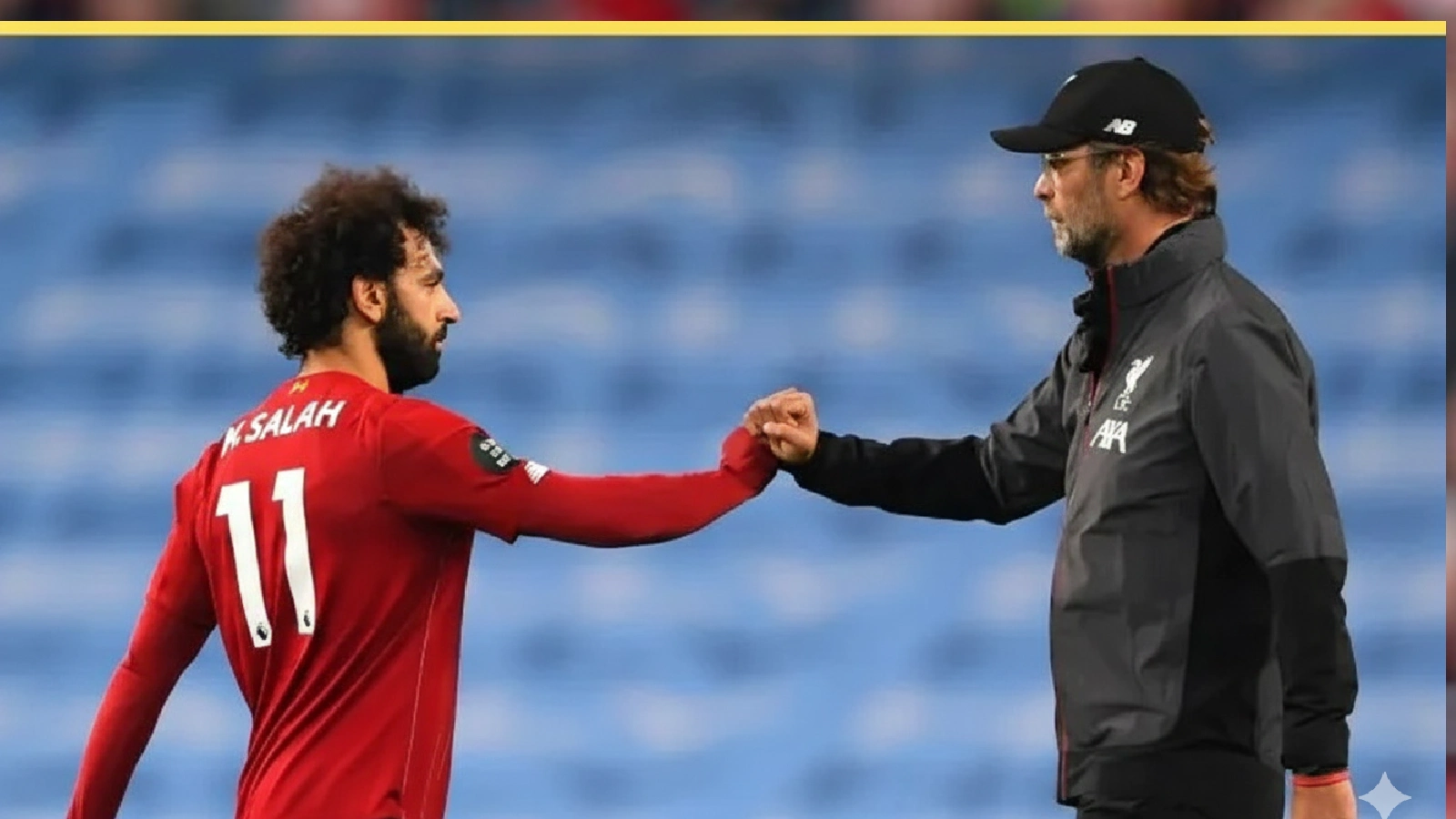
Mohamed Salah career longevity is no longer a side debate at Liverpool; it has become part of how the club frames his value, because his output has already crossed from form into legacy. Salah’s scoring and assisting numbers across multiple seasons, plus his reliability in decisive matches, have made him the most dependable forward of the modern era at Anfield. The key point is not just volume but repeatability: he has delivered in league title races, Champions League nights, and high-pressure derbies without needing a tactical system built entirely around him. Even as roles shift, his end product stays. That consistency is why Liverpool can talk about planning cycles around him rather than replacing him season to season.
Klopp’s Thoughts on Salah’s Career
Jurgen Klopp’s description of Salah as “irreplaceable” carried extra weight because it was paired with a concrete time horizon: the manager said he could play for seven more years, a statement that reads as performance-based rather than sentimental. Klopp has watched elite forwards age at close range and rarely offers timelines unless he believes the physical markers are still high. For Liverpool, the underlying message is that Salah fitness and professionalism set a standard inside the dressing room, and that his availability remains close to elite levels. The comments also work as a public counter to any narrative that the team must move on quickly from older stars, or that productivity must collapse with age.
Projecting football longevity for a winger-forward profile requires more than counting birthdays; it requires looking at how the player wins actions. Salah’s game has never relied solely on explosive dribbling volume, which is usually the first trait to fade. He creates separation through timing, shoulder-to-shoulder strength, and deceptively efficient movement between full-back and centre-back, traits that can be maintained as peak speed declines. His durability record also matters: repeated full seasons with limited downtime suggests strong recovery habits and disciplined load management, both of which extend careers. The club’s sports-science environment can further reduce risk when used properly. A comparable approach to conditioning is discussed in broader coverage of modern elite management on BBC Sport’s reporting on top-level player care.
Age-resistant careers in the modern game tend to belong to players who adjust their role before the game forces the adjustment. Salah can follow that template by becoming more of a penalty-area predator, a transition seen with wide forwards who keep their finishing but trim the highest-intensity defensive running. The elite examples are those who preserved decision-making and finishing while changing where they receive the ball. That is why comparisons with long-lasting stars are useful, not as a claim of identical careers but as evidence that top attackers can remain decisive into their mid-to-late thirties when their team structures around their strengths. Even Messi’s later-career adaptation shows how legacy players can still shape clubs, a phenomenon echoed in Inter Miami’s tribute to Messi as star power and production stay intertwined.
Factors Influencing Football Longevity
Several variables will decide whether Salah turns Klopp’s optimism into reality, and most are controllable. Training periodisation, minutes management, and hamstring load are obvious, but so is tactical responsibility: if he is asked to sprint repeatedly into deep defensive positions every week, risk rises, while smarter pressing triggers can protect him. Nutrition and sleep discipline remain fundamental, yet the modern difference-maker is micro-management of fatigue across congested schedules, especially when European fixtures compress recovery windows. Liverpool’s wider planning also matters because squad quality determines how often Salah must play through minor issues. The same strategic scheduling considerations appear across the Champions League landscape, including in situations like PSG rescheduling league fixtures to aid European priorities, an example of clubs shaping calendars to preserve key players.
Comparing with Other Long-Lasting Players
When comparing Salah with other long-lasting players, the most relevant benchmark is not position labels but workload and efficiency. Players who remain elite late typically reduce wasteful actions and keep decisive touches high: fewer low-probability dribbles, more first-time finishes, more calm choices in transition. Salah already operates with high shot quality and ruthless penalty-box instincts, which supports longevity because it reduces the need to win repeated footraces. Another factor is competitive motivation, which often sustains training standards as physical attributes change. External analysis of how elite performers extend peaks is common in outlets such as Goal’s feature coverage on top forwards, which regularly highlights role evolution, recovery, and tactical fit as the hidden drivers behind late-career productivity.
Future Prospects and Challenges
The biggest challenge to an extended Salah run is not a single opponent or season but the accumulation of small margins: reduced rest windows, tactical demands, and the need for Liverpool to refresh the squad around him without destabilising output. If Klopp’s view is that seven more years are possible, it implies confidence that Salah can remain a reference point while younger attackers rotate around him, protecting his sharpness for the matches that define campaigns. That kind of future-proofing requires recruitment that complements rather than duplicates his movement, plus coaching clarity about when to preserve him. The club has navigated similar questions with other elite roles, and league-wide examples show how contract cycles and performance windows must align, as seen in discussions about long-term planning in pieces like Rodri’s future entering a key phase where timing shapes careers as much as talent.