

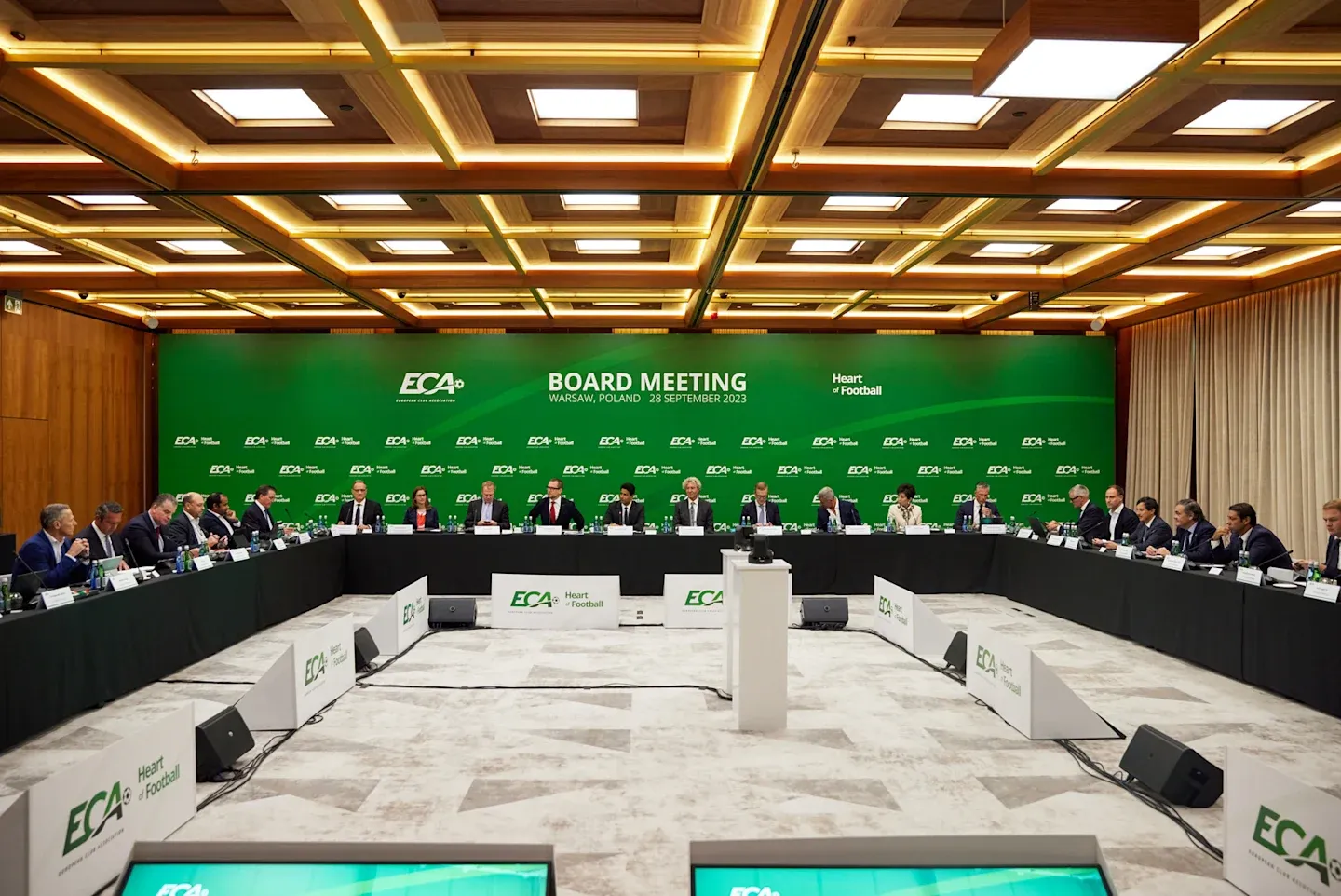
The European Club Association Board convened this week to progress its strategic and governance reform programme, marking a significant step in shaping the future of European club football. The meeting focused on aligning long-term objectives, refining governance structures, and ensuring that member clubs are represented effectively in decision-making processes.
Board members reviewed key components of the reform agenda, including transparency measures, operational efficiency, and stakeholder engagement. The programme is designed to strengthen ECA’s role as a coordinating body while responding to evolving challenges in European football.
Strategic priorities discussed during the meeting included financial sustainability, competitive balance, and youth development. The Board emphasized the importance of reinforcing structures that support clubs of all sizes, from elite teams to mid-tier organizations, ensuring the stability of the football ecosystem.
Governance reform was a central topic. ECA plans to modernize decision-making frameworks, improve accountability, and enhance participation from member clubs. This includes clearer processes for elections, committee operations, and reporting mechanisms.
Digital transformation and communication were also addressed. Board members highlighted the importance of leveraging technology to facilitate engagement, data-driven decision-making, and more effective dissemination of information to members across Europe.
The programme additionally focuses on alignment with broader European football governance. Cooperation with UEFA and other bodies was reaffirmed as essential for maintaining consistent regulations and promoting the collective interests of clubs. Strategic collaboration remains a priority.
The Board reviewed progress on previously initiated projects, including youth development exchanges, women’s football initiatives, and financial support programmes. Insights from these activities will inform ongoing governance improvements, ensuring that lessons learned are incorporated into structural reforms.
Risk management and financial oversight were discussed as part of the reform framework. Strengthening these areas is seen as critical to protecting clubs from volatility and ensuring sustainable growth. Board members underlined the need for proactive monitoring and consistent standards across competitions.
The meeting also included discussions on fostering inclusivity and diversity within ECA structures. Greater representation and participation are considered vital for long-term legitimacy and relevance. These principles will guide upcoming amendments to internal governance policies.
Next steps involve finalizing proposals for presentation to the wider membership at the General Assembly. ECA aims to ensure that all reforms are transparent, practical, and aligned with the collective needs of member clubs. Engagement and consultation remain ongoing priorities.
Board members highlighted the importance of communication with stakeholders during the reform process. Clear messaging ensures that clubs understand the objectives, benefits, and responsibilities associated with the programme. This transparency is key to successful implementation.
The strategic and governance reform programme reflects ECA’s commitment to modernizing European football administration. By strengthening structures, improving accountability, and fostering collaboration, the association seeks to safeguard the long-term health of the sport.
As European football continues to evolve, robust governance is increasingly critical. The Board’s meeting demonstrates proactive leadership in addressing emerging challenges and positioning clubs for sustainable success. ECA aims to set a model for collective, forward-thinking governance in the professional game.

