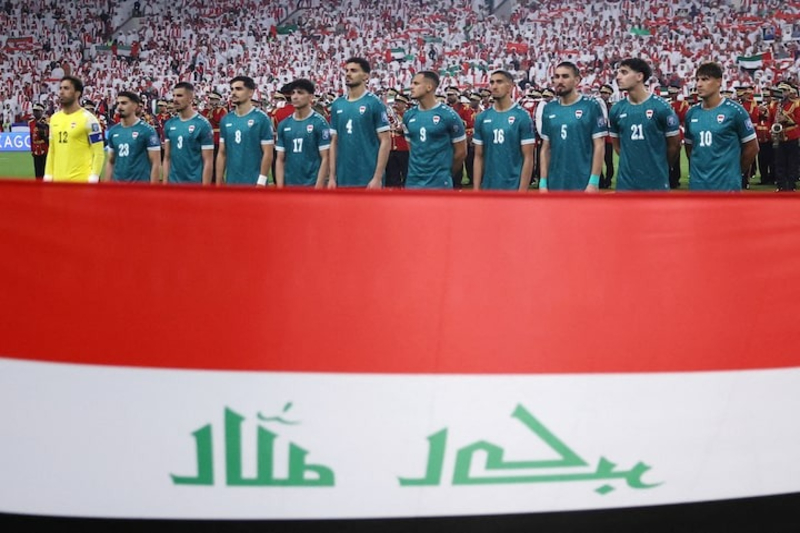
Iraq’s hopes of securing a place in the FIFA World Cup are facing unexpected uncertainty as travel disruptions linked to the regional conflict involving Iran threaten the national team’s ability to reach a crucial playoff match in Mexico. The Iraqi team is scheduled to compete in an inter confederation playoff that will determine the final spots for the upcoming World Cup tournament. However the current situation in the Middle East has created serious logistical challenges for players, coaches and staff attempting to organize international travel ahead of the decisive match.
The playoff match is expected to take place in Monterrey on March 31 where Iraq are set to face the winner of a qualifying encounter between Bolivia and Suriname. Victory in the playoff would secure Iraq a place in the World Cup finals, marking a historic return for the national team to football’s biggest stage. Iraq last participated in the World Cup in 1986 and qualification for the upcoming tournament would represent a major milestone for the country’s football program and supporters.
Travel complications began after the escalation of military conflict involving Iran, which has resulted in the closure of Iraqi airspace. With commercial flights disrupted and several regional airports affected by the situation, the Iraqi national team is struggling to coordinate international travel arrangements. Officials confirmed that the closure of airspace has prevented several members of the squad and coaching staff from leaving their current locations, creating uncertainty around whether the full delegation can reach Mexico in time for the playoff.
The situation has also affected the team’s head coach Graham Arnold, who is currently unable to depart from the United Arab Emirates due to travel restrictions linked to the ongoing conflict. In addition to transportation issues, administrative obstacles have further complicated preparations for the match. According to team representatives, some embassies in the region remain temporarily closed, which has prevented players and staff from securing the necessary entry visas required to travel to Mexico.
Iraqi football authorities say they are maintaining continuous communication with international football bodies in order to monitor the situation and explore potential solutions. Both FIFA and the Asian Football Confederation have been informed about the difficulties facing the team as they attempt to organize travel arrangements. Officials from the national team emphasized that they remain committed to participating in the playoff and are working closely with governing organizations to resolve the logistical challenges as quickly as possible.
The playoff tournament represents one of the final stages of the qualification process for the expanded 2026 World Cup. With the competition set to feature 48 national teams, several additional places have been made available through inter confederation playoffs involving teams from different football regions. Iraq entered the playoff stage as one of Asia’s strongest remaining contenders and was widely considered a favorite to secure one of the remaining tournament slots.
Elsewhere in the qualification process, other national teams are preparing to compete in a separate playoff tournament taking place in Guadalajara. That competition will include New Caledonia, Jamaica and the Democratic Republic of Congo, with only one of those teams advancing to the World Cup finals. The inter confederation playoffs have therefore become a critical pathway for several nations seeking to complete the final lineup for the global tournament.
The 2026 FIFA World Cup will be hosted jointly by the United States, Mexico and Canada from June 11 to July 19. As preparations for the tournament continue across North America, Iraq’s situation highlights how geopolitical events can unexpectedly influence international sport.