

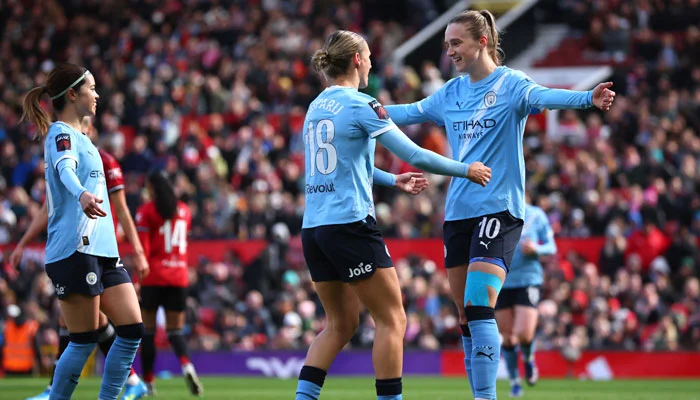
Introduction to the Manchester WSL Derby
The Manchester WSL derby arrives with consequences that extend well past local noise, because both teams are being judged against hard targets rather than sentiment. In this Manchester WSL derby, Manchester United Women and Manchester City Women carry different pressures: one needing consistency against elite opposition, the other needing ruthless control of matches they are expected to win. The contest has become a referendum on execution, not identity, with small margins deciding whether the week is framed as progress or a missed opportunity. Coverage has rightly stressed the stakes and context; the wider spotlight, including analysis from BBC Sport’s match preview and reporting, reflects how this fixture now sits in the league’s decisive tier each season.
Current Standings and What’s at Stake
League position shapes the strategy, because the table compresses decision-making into ninety minutes where caution can be punished and ambition can be exposed. The WSL title race is not just about chasing first place; it also determines how managers rotate, how risks are measured, and how teams protect goal difference and momentum. For Manchester United Women, the derby is an opportunity to validate recent patterns, particularly in games where control can vanish after a single transition. For Manchester City Women, it is a test of whether their territorial dominance converts into separation on the scoreboard. The context mirrors wider scheduling and competitive stress seen elsewhere, like the domestic adjustments covered in PSG’s rescheduled league clash for Europe, where league points and longer-term goals collide.
Key Players and Matchups to Watch
Decisive derbies are usually decided by recurring duels rather than one-off moments, and this one is likely to pivot on who wins the first pass into the final third. City’s ability to circulate the ball at speed forces opponents to defend for long phases, so United’s midfield screen must be disciplined in distances and timing, especially when City overload the half-spaces. United, meanwhile, can threaten quickly when they turn pressure into forward carries, but that requires cleaner outlet options and a willingness to commit runners beyond the ball. The clearest matchup is City’s wide progression against United’s full-back and winger coordination, where a single late rotation can open a lane to the byline. Wider tactical parallels are discussed in Sky Sports football analysis, where structure and tempo often explain results better than narrative.
Fan Expectations and Match Atmosphere
The atmosphere around this fixture is now shaped by expectation management as much as rivalry, because supporters have seen enough top-end WSL games to demand tactical clarity and emotional control. When tempo spikes, crowd pressure amplifies every turnover, and that can speed up decision-making in ways that benefit the better-drilled side. United’s home support typically responds to aggressive pressing and quick switches of play, while City’s travelling fans tend to grow into games where possession becomes suffocating and opponents tire. The derby also draws a broader national audience that often arrives with fixed opinions about identity, which increases the scrutiny on coaching choices and substitutions. That scrutiny mirrors the modern football information cycle in men’s coverage too, from reaction pieces like Salah’s Liverpool departure and what’s next, where performance and perception merge instantly online.
Impact on the WSL Title Race
What the result does to the WSL title race is concrete, because it shifts not only points but also the probability of sustaining form through the most demanding run-ins. A win can validate a team’s methods under derby-level intensity, while a defeat can expose the specific phase of play that opponents will target in subsequent weeks. For City, dropping points in games of this magnitude invites pressure to be perfect elsewhere, and perfection is difficult when injuries and fatigue accumulate. For United, taking points from a direct rival can change the tone of the sprint finish, especially if it comes with a performance that suggests repeatability rather than a one-night spike. The broader title-race psychology is well explored in long-form match and season writing, including work often published at The Guardian’s football section, where pressure dynamics are treated as part of elite performance.

