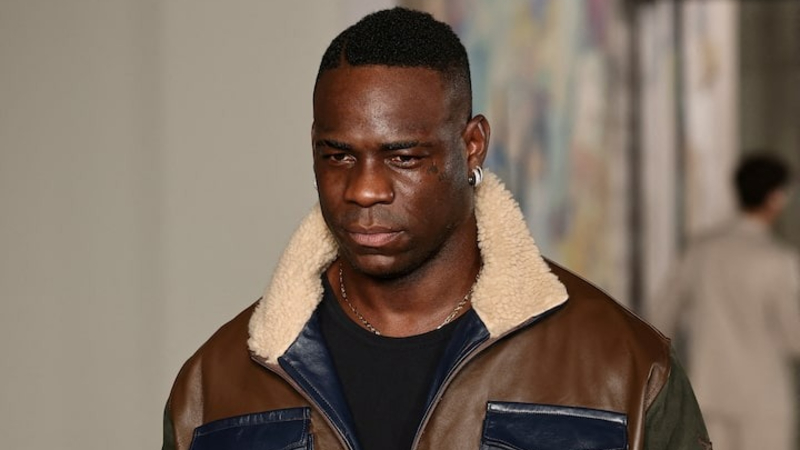
Former Italy international Mario Balotelli has said he was subjected to racial abuse while playing in the United Arab Emirates, raising fresh concerns about discrimination in football. The 35 year old forward claimed he was racially insulted during a second tier league match involving his current club Al Ittifaq and Dubai City.
Balotelli, who recently joined Al Ittifaq after a spell with Italian side Genoa, stated that the abuse occurred during Wednesday’s fixture, which his team lost 2 0. In a social media post after the match, he said he had been targeted multiple times with racist remarks from the stands.
The striker wrote that he was told to go eat banana and described the chants as unacceptable and deeply offensive. He stressed that there is no place for racism in football or in society and said he felt compelled to speak out not only for himself but for other players who have experienced similar incidents.
Balotelli has long been outspoken about racism throughout his career. During previous spells in Italy and England, he faced discriminatory abuse on several occasions and repeatedly called for stronger action from authorities. His latest comments suggest he did not expect to encounter similar behavior in the UAE.
He expressed hope that serious measures would be taken to prevent such incidents in the future. At the time of his statement, there had been no immediate public response from either Al Ittifaq or Dubai City regarding the allegations.
Balotelli remains one of the most high profile figures to play in the Emirati second tier. Over his career, he has represented clubs including Manchester City, Liverpool, AC Milan and Inter Milan, earning a reputation as both a talented and outspoken player. His move to the UAE was seen as a fresh chapter, but the latest development has quickly drawn attention back to off field issues.
Racism in football continues to be a global challenge despite ongoing campaigns and regulations aimed at tackling discrimination. Governing bodies across Europe and Asia have introduced fines, stadium bans and awareness programs, yet players still report incidents at various levels of the game.
Balotelli’s decision to publicly share his experience is likely to intensify scrutiny and prompt discussions within local football authorities. As debates continue around player welfare and stadium conduct, the incident adds to wider calls for consistent enforcement of anti racism policies across all leagues.