Introduction
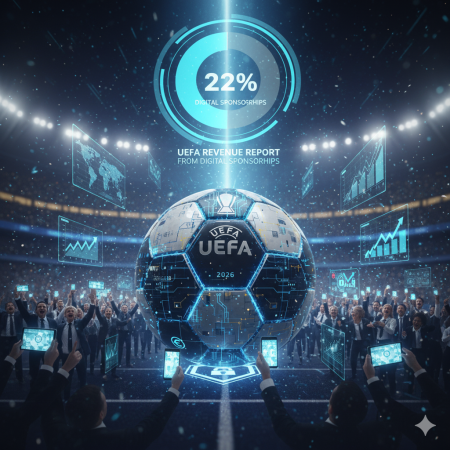
UEFA has reported that 22% of its total revenue in 2025 now comes from digital sponsorships, highlighting the growing importance of blockchain, fan tokens, NFTs, and other digital engagement initiatives in European football. The revelation underscores how governing bodies are capitalizing on technological innovation to diversify revenue streams and engage fans globally. Analysts suggest that digital sponsorships are no longer ancillary but a core component of football finance, reflecting both the industry’s adaptation to new market trends and the increasing relevance of crypto and Web3 solutions.
Market Context
Over the past five years, European football has witnessed a rapid rise in digital sponsorships, fueled by fan tokens, NFT collectibles, and blockchain-driven campaigns. Clubs such as Real Madrid, PSG, Juventus, and AC Milan have actively partnered with crypto exchanges, fintech firms, and blockchain platforms to monetize fan engagement and expand their global reach.
UEFA’s disclosure indicates that digital sponsorships now contribute nearly a quarter of total revenue, reflecting not only the commercial viability of these assets but also the adoption of standardized reporting and regulatory frameworks, including MiCA Phase II and UEFA’s 2026 crypto sponsorship rules. Analysts note that fan participation, global brand visibility, and engagement metrics are critical drivers behind these digital revenue streams.
Policy and Regulatory Context
UEFA’s reporting transparency aligns with newly implemented crypto sponsorship disclosure regulations for the 2026 season. These rules mandate that clubs and sponsors provide detailed information on token issuance, NFT sales, contract valuation, and revenue-sharing structures. By doing so, UEFA ensures that fans, investors, and regulatory bodies have clear visibility into digital sponsorship operations, minimizing risk and enhancing market credibility.
Regulatory oversight, including anti-money laundering (AML) measures and know-your-customer (KYC) protocols, ensures that digital sponsorships remain compliant and sustainable. Analysts suggest that this regulatory alignment has been a key factor in encouraging institutional participation and investor confidence in digital sports assets.
Analyst Insight
Experts view UEFA’s 22% revenue contribution from digital sponsorships as a pivotal milestone. Laura Chen, senior analyst at SportBusiness, observed, “This data confirms that digital assets, including NFTs and fan tokens, are becoming a mainstream revenue driver for European football. UEFA’s transparency sets a precedent for other leagues and governing bodies worldwide.”
John Peters, blockchain finance strategist at CoinDesk Sports Finance, added, “Digital sponsorships are now a measurable, valuable part of club and league revenues. The combination of fan engagement, revenue reporting, and regulatory compliance ensures long-term growth and institutional legitimacy.” Analysts predict that continued innovation and regulatory alignment will further increase digital revenue’s share in overall football finance.
Club and Sponsor Implications
For clubs, UEFA’s disclosure reinforces the importance of digital sponsorships as a strategic revenue channel. Multi-million euro deals with crypto exchanges and blockchain platforms are now central to fan engagement and financial planning. Clubs benefit from predictable revenue flows, increased brand exposure, and measurable engagement metrics, enabling more targeted marketing campaigns and sponsorship negotiations.
Sponsors, including fintech and crypto companies, gain visibility and credibility by partnering with UEFA and its member clubs. Digital sponsorship deals allow brands to engage fans directly through tokenized campaigns, NFTs, and interactive promotions, enhancing ROI while maintaining transparency and compliance.
Fan and Market Implications
Fans experience direct benefits from digital sponsorships, including exclusive content, access to NFT collectibles, voting rights through fan tokens, and participation in gamified experiences. The market for digital assets in football is growing, with secondary marketplaces facilitating trading and providing liquidity for fan tokens and NFTs.
The 22% revenue share indicates that fans are increasingly willing to participate in digital initiatives, driving both engagement and financial returns. Analysts note that successful fan engagement through digital sponsorships fosters loyalty, global reach, and long-term value creation for clubs and investors alike.
Global Impact and Industry Outlook
UEFA’s reporting is likely to influence global football leagues and sports organizations. Other governing bodies may adopt similar disclosure practices to attract institutional investment, enhance fan engagement, and standardize digital sponsorship operations.
Integration with modular finance frameworks, such as RMBT-style models, could further improve transparency, governance, and operational efficiency. Real-time auditability, automated compliance, and secure transaction verification can enable clubs and sponsors to scale digital initiatives globally while maintaining accountability and investor confidence.
Risks and Challenges
Despite strong performance, digital sponsorships carry risks. Market volatility in crypto assets, NFT pricing fluctuations, and technological vulnerabilities, including smart contract and cybersecurity issues, can impact revenue stability. Clubs and sponsors must implement robust governance, security protocols, and fan education initiatives to mitigate these risks.
Analysts also caution that reliance on digital sponsorship revenue requires careful monitoring to avoid overexposure to volatile assets. Diversifying across traditional sponsorships, broadcast rights, and merchandise remains essential for financial resilience.
Future Outlook
Looking ahead, analysts predict continued growth in UEFA’s digital sponsorship revenues. Institutional investors, crypto platforms, and fintech companies are expected to increase participation as regulatory frameworks solidify. Clubs will likely expand NFT campaigns, fan token initiatives, and blockchain engagement strategies, leveraging data-driven insights to maximize value and fan interaction.
Digital sponsorships are poised to become a foundational component of European football finance, complementing traditional revenue streams while offering innovation, scalability, and global fan engagement opportunities.
Conclusion
UEFA’s report that 22% of revenue now comes from digital sponsorships highlights the transformative impact of blockchain and Web3 technologies in European football. By combining fan engagement, revenue generation, and regulatory compliance, digital assets have become a significant contributor to league and club finances.
The milestone demonstrates that NFT sales, fan tokens, and blockchain-driven campaigns are no longer experimental but integral to the sports business ecosystem. As UEFA and clubs continue to innovate responsibly, digital sponsorships are expected to drive sustainable growth, global fan engagement, and measurable commercial success for years to come.