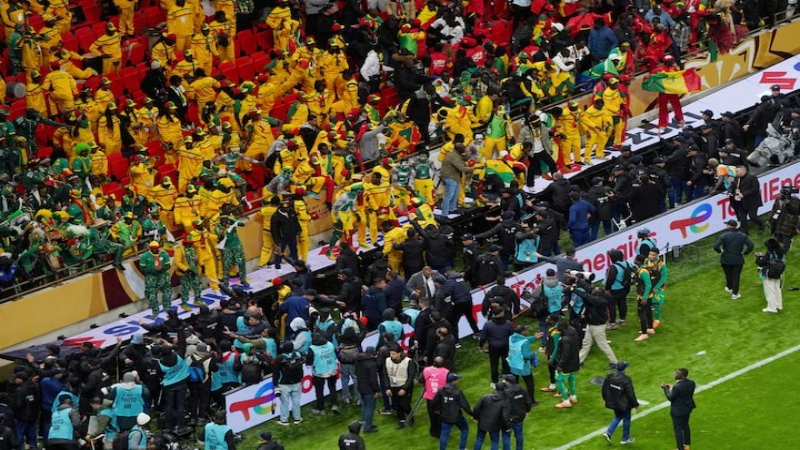
The controversy surrounding the African Cup of Nations final between Senegal and Morocco has continued to unfold, drawing strong reactions from political and football authorities. Senegal’s Prime Minister Ousmane Sonko publicly described the incidents linked to the final as deplorable and emotionally painful, acknowledging the strain they placed on relations between the two nations. The final, held in Rabat, was marked by a tense VAR decision that awarded Morocco a penalty, prompting Senegalese players to temporarily walk off the pitch in protest before later returning to secure a 1–0 victory after extra time. The decision sparked unrest among supporters, with groups of Senegal fans attempting to access the pitch, leading to clashes with Moroccan security personnel inside the stadium.
The aftermath of the match has placed African football authorities under renewed scrutiny. CAF confirmed that it is reviewing reports from the final and assessing potential disciplinary measures related to the conduct of players, officials, and supporters. The situation has also drawn condemnation from FIFA leadership, with Gianni Infantino criticizing the behavior seen during the decisive moments of the match. The Moroccan football federation has indicated it is pursuing formal action through CAF and FIFA channels, citing concerns over match integrity and stadium security. The incident has fueled intense debate across social media platforms, reflecting broader tensions around officiating standards and the growing pressure on governing bodies as African football attracts larger global audiences.
Despite the controversy, leaders from both countries have emphasized the importance of preserving long standing diplomatic ties. Senegal and Morocco share close political relations, including cooperation on regional issues and economic initiatives. Addressing officials during a joint commission meeting in Rabat, Sonko stressed that the unrest should be viewed as an emotional reaction driven by sporting passion rather than a sign of political or cultural division. Moroccan officials echoed this position, noting that isolated incidents should not overshadow the broader success of the tournament or weaken African solidarity. As CAF prepares its response, the episode highlights the increasing stakes surrounding major African football events and the need for stronger governance as the sport’s profile continues to rise.