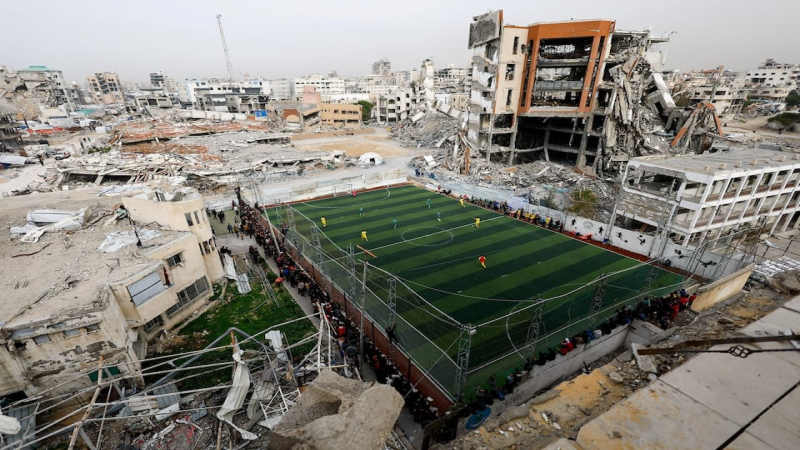
On a scarred five a side pitch surrounded by shattered buildings and piles of rubble, organized soccer has returned to the Gaza Strip for the first time in more than two years. In Gaza City’s Tal al Hawa district, where destruction still defines the landscape, two matches marked a quiet but powerful moment for local players and residents searching for normality amid loss.
The opening game saw Jabalia Youth face Al Sadaqa, ending in a draw that mattered less than the act of playing itself. A second match between Beit Hanoun and Al Shujaiya followed with the same scoreline. Around the small pitch known locally as Palestine Pitch, spectators pressed against chain link fencing, climbed broken concrete walls, and peered through gaps in ruined structures to catch a glimpse of the action. A drum echoed through the area, cutting through the silence that had dominated the neighborhood since the fighting ended.
For players, stepping back onto the field carried a mix of emotions. Youssef Jendiya, a twenty one year old from Jabalia, described the experience as overwhelming. His home area was largely depopulated and bulldozed during the war, and many familiar faces were missing. Some teammates were killed, others injured, and some had left Gaza for medical treatment. The joy of playing again, he said, was real but incomplete.
Daily life in Gaza remains deeply strained. Many residents spend their mornings searching for water, food, and basic supplies. Housing is scarce, and families crowd into damaged buildings or makeshift tents. Against that backdrop, the matches offered a brief escape, a few hours when players and fans could express emotions that have had little space elsewhere.
Four months after a ceasefire halted major fighting, large scale reconstruction has yet to begin. Israeli evacuation orders still cover nearly two thirds of the territory, forcing more than two million people into a narrow coastal area filled with ruins. One of the most visible symbols of loss is the former Yarmouk Stadium, once a nine thousand seat venue. Leveled during the war, the site is now occupied by rows of white tents sheltering displaced families on what used to be the playing field.
To stage this week’s tournament, local football organizers cleared rubble from part of a collapsed wall, erected temporary fencing, and swept debris from the remaining artificial turf. The pitch was reduced in size, but the effort allowed the games to go ahead safely.
Players said their presence carried meaning beyond the scoreline. By taking the field, they wanted to show resilience and continuity. In a place defined by destruction and uncertainty, the simple act of playing soccer sent a message that life, in some form, continues.