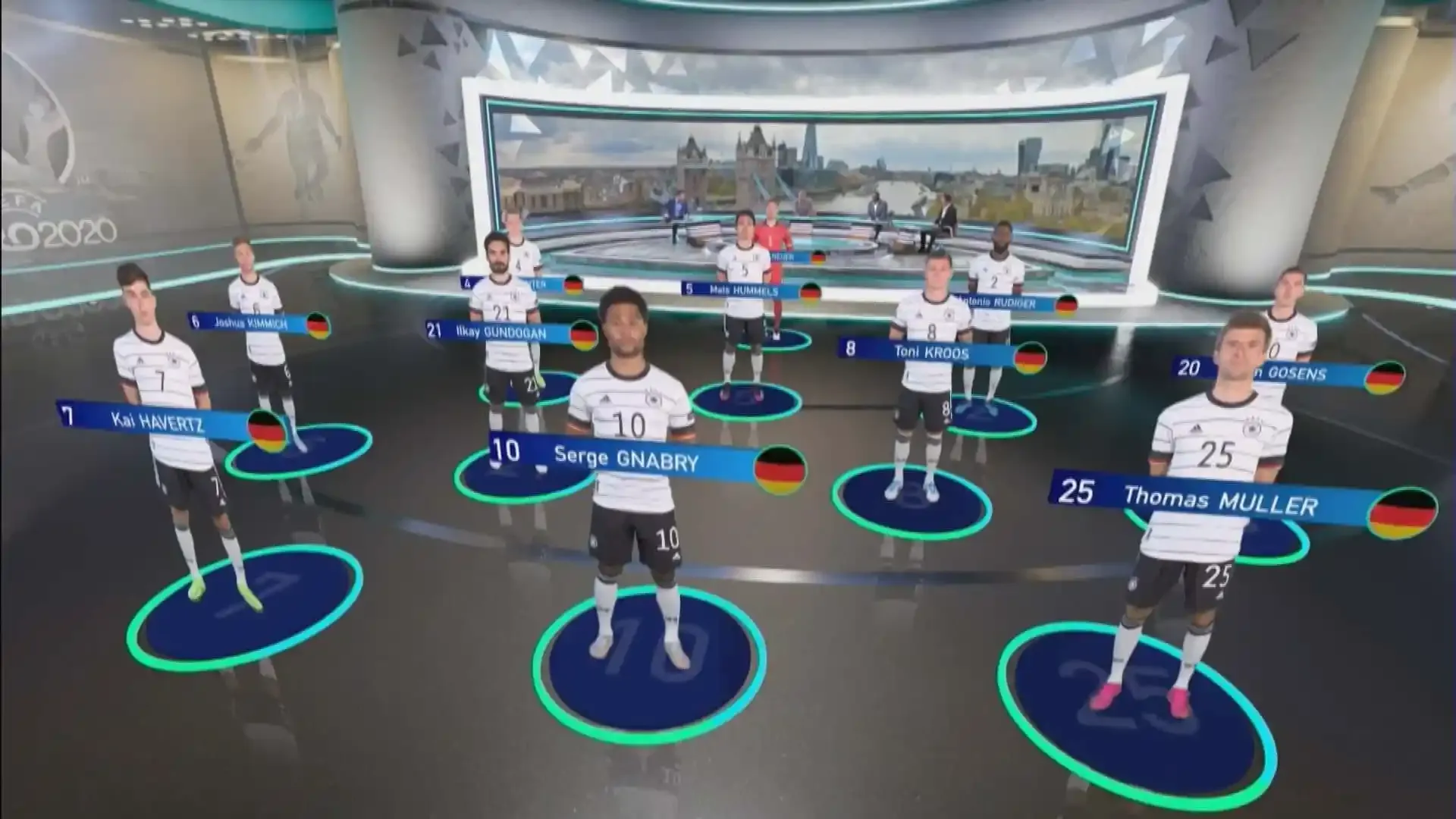
European broadcasters are pushing the boundaries of sports entertainment with a new experiment that blends real-time augmented reality overlays into live football matches. Instead of the usual static graphics at the bottom of the screen, viewers can now see dynamic AR elements appear directly on the pitch. Stats float beside players as they run, passing lines curve across the field, and heat maps build instantly after key moments. The trial has made broadcasts feel more immersive and futuristic, giving fans fresh insight without interrupting the flow of the game.
This development arrives as audiences demand richer and more interactive viewing experiences. Traditional commentary and graphics still matter, but today’s fans want more context while the action unfolds. Real-time AR enhances understanding by showing tactical details and performance metrics instantly. Broadcasters believe this technology can help viewers follow the match more deeply, whether they’re devoted analysts or casual fans watching from home.
Why Real-Time AR Overlays Could Transform Live Broadcasting
The most important reason AR overlays are gaining attention is how seamlessly they integrate data into the match. Instead of pausing to show replays filled with analysis, broadcasters can highlight important details as they happen. When a midfielder completes a key pass, a line may appear showing the passing lane. When a defender makes a crucial interception, a quick graphic can show positioning accuracy. These elements bring strategy to life in ways that were previously impossible during live play.
The overlays also help fans understand match dynamics without overwhelming them. Instead of offering long charts, AR tools focus on short, meaningful visuals. This gives viewers real-time clarity on momentum shifts, player fatigue, or tactical changes. Broadcasters say the technology bridges the gap between casual viewers and hardcore tacticians. It turns the broadcast into an experience that feels informative yet easy to follow, making the match more engaging from start to finish.
How Broadcasters Build and Test These AR Systems
Behind the scenes, the technology relies on advanced tracking systems paired with high-speed data processing. Cameras positioned around the stadium capture player movements in milliseconds, sending information to software that converts it into simple visuals. Rendering systems then place the graphics on screen without interrupting the action. Broadcasters test these overlays during pre-season matches and smaller league games to ensure accuracy.
The process also requires close coordination with production teams. They decide when to activate overlays, how often to use them, and which moments benefit most from extra context. Too many graphics could distract viewers, while too few could weaken the purpose of the trial. Early tests show that a balanced approach creates the best experience. Broadcasters aim to enhance the game, not overshadow it.
Fan Reactions Show Strong Interest and Mixed Curiosity
Fans watching these AR trials have shared a mix of excitement and curiosity. Many say the overlays make it easier to see what analysts talk about during halftime shows. Others enjoy being able to track movement patterns or performance stats instantly without searching for additional apps. Viewers appreciate that the overlays simplify complex moments without slowing the match.
However, some fans worry that broadcasts might become too crowded if too many overlays appear at once. They want broadcasts to keep football’s natural feel intact. Broadcasters have responded by limiting overlays during fast counterattacks or moments of high tension. The goal is to support the excitement of the game, not distract from it. Overall, fans agree that AR brings something fresh and compelling to the viewing experience.
What Real-Time AR Means for the Future of Match Coverage
If the trials succeed, AR overlays could become a standard feature in European football broadcasts. Production teams might expand the system to allow fans to customize their viewing experience. Viewers could choose which metrics they want to see, whether that’s pressing intensity, sprint speed, or live xG estimates. This personalization would make broadcasts feel tailored to each fan’s interests.
AR may also play a role in commentary. Analysts could reference overlays directly, using them to explain tactical decisions more clearly. This strengthens the connection between the broadcast team and the audience, creating more immersive storytelling. As technology continues to evolve, the future of football coverage may look far closer to interactive gaming than traditional television.
Conclusion
Real-time AR overlays are bringing a bold new layer to European football broadcasting, giving fans insights that enhance rather than interrupt the action. With smarter visuals, faster data, and a focus on clarity, this technology could redefine the matchday viewing experience for millions of supporters across Europe.