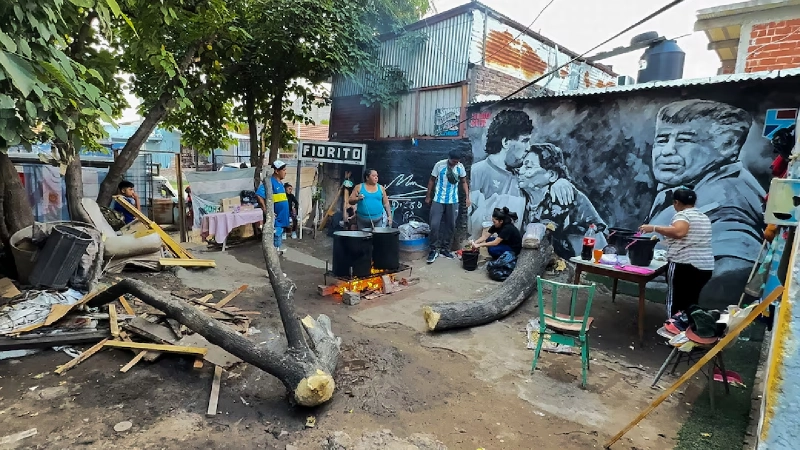
The childhood home of Diego Maradona in Villa Fiorito has taken on a new purpose as a community soup kitchen, offering food to hundreds of residents each week in one of Buenos Aires’ most vulnerable neighborhoods. Once a symbol of humble beginnings for one of football’s greatest icons, the modest house now serves as a gathering point where volunteers prepare meals for families struggling with economic hardship. The transformation highlights both the enduring legacy of Maradona and the ongoing social challenges facing many communities across Argentina.
The initiative began when the current owner of the property allowed local volunteers to use the space to cook and distribute food. Each week, large pots of stew are prepared in the yard as residents line up with containers to collect meals. Volunteers work together to chop ingredients, cook, and serve, creating a grassroots support system that has quickly become essential for many families. A mural on the house, depicting Maradona alongside the words “The house of god,” reinforces the symbolic connection between the football icon and the community he once called home.
The need for such initiatives reflects the broader economic situation in Argentina. Although official data shows poverty has declined significantly over the past year, many households continue to face financial pressure. Economic reforms introduced by Javier Milei have helped reduce inflation, but they have also led to job losses in certain sectors and reduced purchasing power for many citizens. The combination of austerity measures and structural changes in the economy has created uneven impacts, particularly in working class areas like Villa Fiorito.
Local organizers say demand for food assistance has grown as smaller businesses and factories struggle to remain competitive. The shift toward cheaper imports and changes in economic policy have contributed to job losses, leaving many residents reliant on community support. Volunteers running the soup kitchen report that more people are seeking help each week, reflecting the gap between improving macroeconomic indicators and the lived reality of many families. The initiative has become a vital safety net for those navigating ongoing economic uncertainty.
Maradona’s former home was declared a national historic site in 2021, recognizing its importance in the story of one of Argentina’s most celebrated figures. His rise from Villa Fiorito to global stardom remains a source of inspiration, and the current use of the house adds a new chapter to that legacy. Instead of serving only as a memorial, the space now actively supports the community, aligning with the spirit of resilience and solidarity often associated with Maradona’s life and career.
The development also highlights the role of local initiatives in addressing social challenges when institutional support is limited. Community driven efforts like this soup kitchen are becoming increasingly important as economic transitions reshape employment and income stability. While national statistics point to improvements in poverty and inflation, the continued reliance on grassroots support underscores the complexity of Argentina’s recovery and the need for sustained growth across multiple sectors.
As more residents turn to the soup kitchen for assistance, the site has become both a practical resource and a powerful symbol of unity. The transformation of Maradona’s childhood home into a place of support reflects how deeply his legacy remains connected to everyday life in Argentina. It also serves as a reminder that even as economic indicators improve, the impact on communities can take longer to stabilize, keeping local solidarity efforts at the forefront of social support.